
Photographing Children Through the Ages: How Developmental Psychology Shapes Every Session

As a professional photographer with a psychology degree who now spends her days wrangling toddlers and coaxing genuine smiles out of skeptical teens, I’ve come to realize that photography is about far more than camera settings and lighting. It’s about people—tiny, growing, gloriously unpredictable people.
Before I ever picked up a camera professionally, I earned a BA (Hons) in Psychology and did independent research focused on child development. Although my career took a detour through 17 years of practicing law (where, incidentally, negotiation skills came in handy for toddler sessions), I never lost my fascination with developmental psychology. As a parent and now as a photographer, I’ve stayed up-to-date with the latest research, which has been incredibly useful when working with children.
Understanding the psychology behind a child’s stage of development completely changes the way you approach a family or child portrait photoshoot. The same techniques that work for a six-month-old are guaranteed to crash and burn with a strong-willed two-year-old—or a self-conscious twelve-year-old.
Knowing why kids behave the way they do helps us meet them where they are, which is the secret to capturing real emotion, connection, and joy in every frame.
I always start my sessions by chatting with parents to learn a little about their child: their age, temperament, favorite shows or characters, and what makes them laugh. If your little one loves Paw Patrol, you’d better believe we’ll be talking about Chase and Marshall and how funny it is when Marshall slips down the firepole. Those little sparks of recognition and joy? That’s the magic we’re trying to bottle up. Because let’s be honest—no one smiles with their eyes when they’re saying “cheese.”
So, let’s walk through the major stages of childhood development—from infants to teens—and talk about what’s happening in their world, the challenges that might come up in a session, and how to turn those challenges into adorable, frame-worthy moments.
Photographing Infants & Toddlers (0–3 years)
Ages 0-1 (Infant)
Developmental overview
Psychosocially: According to Erikson’s first stage, Trust vs. Mistrust occurs from birth (to about 18 months). In this stage, the infant depends fully on caregivers for basic physical and emotional needs; when caregivers respond reliably with warmth, affection, and consistency, the child develops a sense of basic trust (and concomitantly, hope). When care is inconsistent, neglectful or unpredictable, the child may develop mistrust—feeling the world is unreliable. Welcome Home Vets of New Jersey+3Simply Psychology+3Lumen Learning+3
Cognitively: In Piaget’s schema, infants are in the Sensorimotor Stage (birth to about 18-24 months). They learn through sensation, movement, and exploration. A key milestone: object permanence (understanding that things exist even when out of sight). Medical News Today+2eCampus Ontario+2
Behaviorally: At this age, you’ll see strong attachment behaviour (clinging, preference for caregivers), rapid motor development (sitting, crawling, maybe walking), interest in exploring sensorily (touching, mouthing, observing).
Implications: Because infants are so dependent and sensitive to environment and caregiver cues, they are very attuned to emotional climate. They may be wary of strangers, new settings, new people and stimuli.

Issues you might encounter during your Milestone of Family Photoshoot
The child may be unsure of you (the photographer) as a “stranger.” They may cling to parent, protest being set down, or freeze.
They may be easily overstimulated by a new environment, bright lights, multiple people or props.
Their tolerance for direction is minimal — you won’t get long sessions, big smile-poses, or “stand still” behaviour.
Timing is everything — nap times, feeding times matter. If they’re tired/hungry you will get fussiness.

Practical-tips for photographing this age
Start with a meet-and-greet moment: let the infant observe you, maybe sit on parent’s lap, you chat quietly, let them feel safe before the camera comes out of “big production mode.”
Use parent as a comfort anchor: keep parent close by, allow baby to engage with them, intersperse parent-child interactions (which often give the most authentic expressions).
Focus on natural engagement, exploration: e.g., baby looking at light filtering through leaves, baby’s toes, baby discovering grass, baby smiling at parent. These small moments reflect trust, curiosity.
Work fast but gently — warm tone, low pressure, mixing in playful sounds, bubbles, toys to elicit a smile or wide-eyed look.
Outfit changes: for this age, one comfortable outfit, ideally something soft, minimal fuss. Multiple changes risk fussiness.
Environment: prefer a familiar or low-stimulus location (home, backyard, favourite blanket) to reduce anxiety.

Ages 2-3 (Toddler)
Developmental overview
Psychosocially: Erikson’s stage here is Autonomy vs. Shame & Doubt (approximately 18 months to 3 years). In this stage, toddlers are actively asserting independence: “I do it myself.” They are developing motor skills, exploring their world and their sense of self-control. If caregivers allow safe exploration and support independent attempts, children develop autonomy/will; if caregivers are overly restrictive, critical or do too much for the child, they may develop shame or doubt in their ability to manage. SUNY Cortland - Services+1
Cognitively: In Piaget’s model this age sits at the tail end of the sensorimotor and beginning of the Pre‐operational Stage (roughly 2-7 yrs). Children start to use symbols, imagination, language. They engage in symbolic play (“my teddy is the king”), but logic is still limited and thinking remains egocentric. Medical News Today+1
Behaviorally: You’ll see increased mobility (running, jumping), strong desire for independence (choosing toys, clothes, activities), frequent “No!” moments, explorations, testing limits, some emotional volatility as they assert autonomy but still need support.

Issues you might encounter during your Milestone of Family Photo session
“No!” is the toddler’s mantra. Directing “sit here and smile” may trigger resistance or meltdown.
They may switch mood quickly: from giggling to meltdown in seconds if frustrated or bored.
They may wander, spin, run off — your session needs to be dynamic and mobile.
They may want control — e.g., they insist on choosing a toy, or doing it “their way”.
Changing outfits or moving locations may feel like intrusive demands to their emerging autonomy.

Practical-tips for photographing this age
Use their sense of agency: “Would you like to hold this toy and show me how it works?” or “Which spot should we go first — the big tree or the little wall?” Giving them choices helps them feel in charge.
Build a game-like approach: “Let’s count how many jumps you can do,” “Let’s find all the leaves that look like stars,” or “Let’s make the biggest roar together.” The game opens pathways to real expressions.
Keep sessions short, fast-moving: change the prompt every few minutes, alternate between simple directive (“go run to Dad and back”) and free play.
Avoid too many outfit changes—keep it to one comfortable change if at all. If you must change, make it fast, let them help with their outfit—it gives autonomy.
Use familiar items/props that belong to them: their favourite toy, their shoes, their action figure. If you pre-ask parents what the child loves (“What toy or game do they ask for every day?”) you can bring that into the session to ease engagement.
Embrace candid moments: the child exploring, mid-laugh or mid-run might yield your best images rather than posed smiles.

What Works (and What Doesn’t) for 0-3 year old Photos
Don’t: Ask them to stand quietly and smile. It won’t happen. Ever.
Do: Make it playtime.
For babies and toddlers, movement and interaction are everything.
I might ask a toddler to “help” me by holding my lens cap or counting to three before I “click.” I’ll play peekaboo, ask them to run toward mom for a hug, or invite them to show me how fast they can spin. The best smiles come when they’re doing something they chose—something that feels like play, not performance.
If they’re shy at first, I slow down. We might take a few minutes just to explore the space together while I chat casually with the parents (toddlers pick up on your energy—if you’re relaxed, they will be too). I keep my distance until curiosity wins them over, and then, boom—suddenly we’re friends.

More Practical Tips for Parents
Start slow. Don’t swoop in with the camera right away. I chat with the parents, let the baby observe me, maybe play a game of peekaboo from behind the lens. Once they sense I’m not a threat, curiosity usually wins.
Keep parents close. Babies take emotional cues from their caregivers. If Mom or Dad is calm and smiling, baby feels safe enough to relax too.
Make it playful. For toddlers, photos should feel like play — running, dancing, playing with bubbles, “helping” with something (“Can you show me how fast you can run to Daddy?” or “Let’s see who can make the biggest roar!”).You’re not posing them; you’re directing their energy into photogenic moments.
Forget “stand still and smile.” Never going to happen. Ever. Instead, capture movement, curiosity, and wonder. A toddler exploring grass, laughing mid-spin, or proudly showing off a rock is gold.
One outfit, max two. Most toddlers have a five-minute patience limit for outfit changes — and that’s on a good day. Prioritize comfort and freedom of movement.
Remember: our goal isn’t perfection—it’s authenticity. The curl of baby toes, the scrunched-up nose when they laugh, the way they bury their face in your shoulder. Those are the moments that tell their story.

Preschoolers (3–4 years): The “I Do It Myself!” Era
Developmental overview
Psychosocially: Erikson’s third stage is Initiative vs. Guilt (approximately ages 3-6). Here children assert control and power over their world through planning activities, making up games, interacting with peers and adults. Success leads to initiative (purpose), failures (via criticism or suppression) may lead to guilt and hesitation. Verywell Mind+1
Cognitively: Preschoolers are firmly in the Pre‐operational Stage (Piaget) (ages ~2-7). They engage in symbolic play, imaginative game, make pretend, but still struggle with logical operations, perspective-taking, and conservation. Egocentrism is still high (they assume others see the world as they do). eCampus Ontario+1
Behaviorally: At this age, you’ll see vivid imagination, question-asking (“Why is the sky blue?!”), role-playing, eager to help (“I’m the helper!”), creativity, and also occasional defiance as they try to lead. They are more socially oriented (playmates, sharing moments) though still self-centred in many ways.

Common challenges:
Power struggles: They want control and might resist direction just to assert themselves.
Shyness or unpredictability: One minute they’re cracking jokes, the next they’re hiding behind Mom’s leg.
Literal thinking: If you tell them to “look over there,” don’t be surprised if they stare into the void like a confused owl.

What works:
Make it a game. “Can you run to that tree and back before I count to five?” or “Let’s play freeze dance — ready?” Suddenly, you have natural laughter and movement without asking for a “pose.”
Let them “help.” Hand them a camera lens cap, ask them to check your screen, or tell them they’re your “assistant.” They light up when they feel important.
Use imagination. Pretend play is magic at this age. “Can you roar like a lion?” “Let’s pretend you’re flying to space!” The sillier, the better.
Don’t fight the mood swings. If they’re having a moment, we pivot — maybe take photos of their stuffed animal or of Mom twirling while they watch. Once they see it’s fun, they often rejoin.
One outfit change max. Anything more, and you risk a meltdown in the changing process.
Preschoolers want to lead the way. Give them space to do that and they’ll reward you with authentic, sparkling expressions. Some of my favorite images come from kids mid-laugh, mid-spin, mid-silly-face — because that’s who they really are.

Ages 5–6: The Big-Kid Beginners
Developmental overview
Psychosocially: Around this age we enter the beginning of Erikson’s Industry vs. Inferiority stage (commonly placed from about age 5-12). During this stage children begin to focus more on learning, mastering skills, comparing themselves to peers, and developing a sense of competence (industry) or, if unsuccessful or lacking support, a sense of inferiority. Simply Psychology
Cognitively: They are still finishing the Pre-operational Stage but transitioning toward the Concrete Operational Stage (Piaget, ages ~7-11) where logical thinking about concrete things begins. By 5-6 they start to understand more cause-and-effect, rules, classification, and shifting from purely symbolic to somewhat more logical thought. Medical News Today+1
Behaviorally: At this age the child is more socially and academically oriented. They may start school or be in early grades, begin group work, care about “Am I good at this?” They are developing friendships, sense of fairness, rule-awareness, more stable self-concept but still highly influenced by adult and peer feedback.
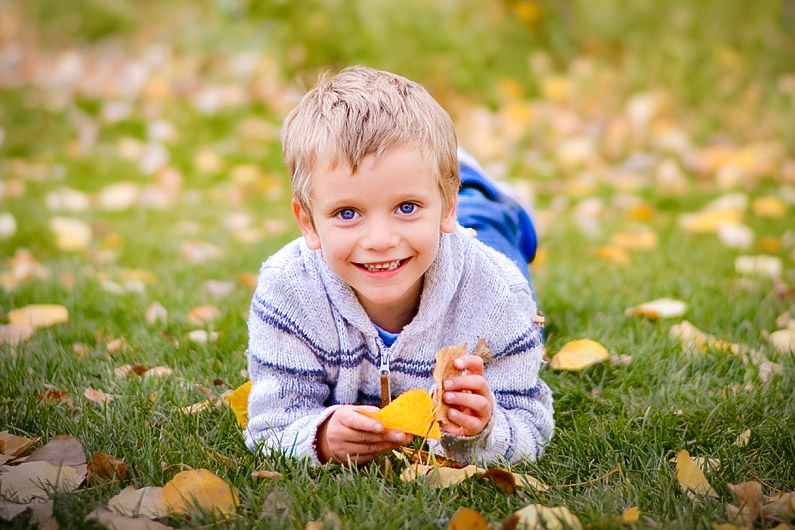
Common challenges:
They may be more self-aware: “Will this photo be nice? Will I look funny?” They might worry about looking silly.
They may comply outwardly, but the inner sparkle may fade if they feel posed or like they’re “doing it for the adults.”
They may resist if they feel things are babyish (“I’m too old for bubbles!”) or too adult (“This is boring”).
They may have more stamina than toddlers, but still limited attention — they may want movement, play, quick change, fewer pauses.

What works:
Encourage silliness first. Before we do any “posed” shots, I let them loosen up — a silly face contest, a game of “guess the animal sound,” or even “show me your strongest superhero pose!” gets them giggling.
Praise effort, not performance. “You’re doing awesome!” “That was such a good idea!” helps build confidence and keeps energy high.
Use prompts tied to their growing sense of competence: “Show me how fast you can swing,” “Let’s count how many leaves you can gather in 30 seconds,” “You’re the team leader – show your sister how it’s done.”
Ask questions that light them up. “What’s your favorite thing about school?” or “If you could be any animal, what would you be?” You’ll get real smiles. By the way, this works with adults too. When I'm doing headshots one of my favorite tricks is to get my client talking about something they love to do: a hobby, their kids, best vacation spots. Suddenly their whole face is dynamic and glowing. Which is actually pretty awesome for a LinkedIn photo update.
Collaborate: “You pick the spot where you want to start,” or “Show me your favourite playground move.” Giving them ownership sets a positive tone.
Alternate action + quiet sweet moments: e.g., start with something like “run to the tree and jump,” then move to “sit with Mom and whisper something funny” or “tell your little sister a secret.”
A bit more flexibility with clothing. At this age, one to two outfit changes is doable if the vibe stays upbeat. Let them have a say in what they wear — autonomy goes a long way.
This is such a sweet age — cooperative but still full of wonder. They’re eager to please, but when you help them forget the camera for a minute, that’s when the real magic happens.

Ages 7–9: “Big-kid beginnings”
Developmental background
At this stage children are firmly in what Erik Erikson calls the Industry vs. Inferiority stage (roughly ages 6-12) — they are working out the question “Can I make it in the world of people and things?” and beginning to compare themselves with peers. Simply Psychology+2OpenStax+2
From a cognitive-developmental lens, the Jean Piaget “Concrete Operational Stage” (ages ~7-11) kicks in: children become more logical about concrete things, they understand conservation, reversibility, and can take others’ perspectives more reliably. Verywell Mind+1
Socially and emotionally, this means they are starting to notice: “How am I doing compared to her?” “Do I fit in?” They care about rules, fairness, peer acceptance, competence, and they may get frustrated if they feel they’re lagging behind. Iowa State University Press+1

Common challenges in a photo session
They may feel self-conscious: “Am I doing this right?” and worry what others think.
Because they understand “rules” more, they might resist if they feel the session is too childish or silly (they may want to look “cool”).
They can comply and smile — but the sparkle might disappear if they feel their performance is being judged or if the pose feels forced.
They may compare themselves to siblings or friends, which can bring out competitiveness (“Am I as good as my brother?”) or hesitation.
Practical issue: their patience for outfit changes, location shifts, or props may be limited — although better than younger kids, still not fully adult-level.

Tips & tricks for photographing ages 7-9
Warm-up with something ‘in their zone’. Ask them what they like (e.g., soccer, drawing, legos). Use that as a prompt: “Show me your best goal-celebration pose!”
Give them a little control. “Which spot do you want to go to — the tree or the wall of bricks?” Choice gives them a sense of competence.
Keep things moving. Alternate posed shots with action: leap in the air, spin, pretend you’re the superhero, etc. This keeps them engaged.
Use peer or sibling prompts smartly. If there are two kids, get them to interact: “You check out how fast she runs, then you try to beat her!” This taps into their growing peer-comparison drive in a fun way.
Encourage effort, not perfect smile. “I love how you turned your head just then — that was awesome!” rather than “say cheese.”
Outfit changes and location shifts: you’re safe with one change. Two might be OK if it’s fast and fun, but more than that risks fatigue.
I had a 8-year-old girl who insisted she didn’t want “the silly games.” Fine. I asked: “Ok, what game do you want to play?” She declared a “freeze-tag run” around the set; three minutes later we had one of the best candid laughing shots of the day. Giving her the game made her feel capable — and that translated to a genuine expression.

Ages 10-12 (Pre-teens): “The almost-teen zone”
Developmental background
This stage marks the transition to adolescence and with it comes more complex social, emotional, and cognitive terrain. In Erikson’s terms, the upcoming task is Identity vs. Role Confusion (around ages 12-18) — though the groundwork begins here. eCampus Ontario
Cognitively, children begin to handle more abstract thought (though full formal operational thinking is still ahead). They can imagine how others see them, worry about status, and become more self-critical.Socially and emotionally: peer relationships become more central, they care about “coolness,” fitting in, being seen as competent or popular. Self-esteem can fluctuate rapidly. OpenStax

Common challenges in a photo session
They may balk at “childish” prompts: bubbles, silly faces, etc might feel beneath them.
On the other hand, they still crave fun — but want it with more control, more style.
They may have more awareness of how they look: hair, clothing, posture — and may compare themselves (to siblings, friends, social media).
They may be less cooperative if they sense the session is “too babyish” or they feel embarrassed by the photographer or the parent watching.
Practical issue: Time management becomes more important — they can do more, but their attention span might wander if things drag. Multiple outfit changes might still be risky unless you keep it snappy and optional.
Tips & tricks for photographing ages 10-12
Frame the session as a “grown-up shoot with fun twists”. Tell them: “We’ll do a few classic portraits, then we’ll do some fun candid stuff.” Let them feel part of the planning.
Ask for their input. “What’s your favorite band? Your favorite hang-out spot? Let’s use that.” This builds agency and makes them collaborators.
Hybrid of posed + action. Offer one formal portrait (they may want “a nice photo for me”) then transition to something more relaxed: walking, interacting with siblings, looking away, laughing.
Minimize parent watching pressure. If the parent is hovering, suggest they step aside or chat with me while we shoot — giving the pre-teen a sense of independence.
One or two outfits max. At this age you can do two changes if the clothing is ready to go and the pre-teen is onboard. If they drag their feet, stick with one good outfit and focus on expression.
Style matters. Offer simple guidance: “Let’s do one shot where you lean against the wall, one where you’re sitting casually.” Give them “cool” cues rather than “smile nice.”
I had a 11-year-old boy who insisted he “didn’t like photos.” I asked him what he did like (skateboarding). We took some glossed “skater-looking” poses: one on a board, one walking down a ramp, one where he caught air. He ended up choosing his favorite as “my photo” and told his mom he didn’t hate the session. Win.

Ages 13-15: “Early teens – the identity tinkering years”
Developmental background
By this age, your subject is firmly moving into what Erik Erikson called the Identity vs. Role Confusion stage. They’re asking questions like “Who am I? Where do I fit in?” and “What kind of person do I want to be?” rather than just “Where am I going to sit at lunch?” Simply Psychology+2Verywell Mind+2
Cognitive and social development shift: early teens begin to reflect more on how others see them, peer approval matters more, social comparisons intensify, self-consciousness skyrockets. Research shows identity development in adolescence involves exploring roles, values and commitments, and that this process is critical for developing a stable sense of self. epublications.marquette.edu+2acycpjournal.pitt.edu+2
Emotionally: they might swing between wanting to be seen as “cool and adult” and still needing comfort; they may worry about embarrassment, their image, and their place in the peer group.

Common challenges in a photo session
They may balk at “cute little kid games” or prompts that feel babyish (“Let’s blow bubbles!” might earn an eye-roll)
They may worry about how they look (hair, outfit, smile) more than younger kids — meaning forced smiles or stiff poses feel awkward or fake
Peer/parent presence can feel especially loaded: if a sibling is involved, competition or comparison may surface (“Mom’s always photographing her younger sister, what about me?”)
They may resist direction if they feel it compromises their autonomy or “cool factor”
Practical: longer sessions may fatigue them; outfit changes might feel like too much effort or too many decisions.
Tips & tricks for photographing ages 13-15
Start with their interests. Ask ahead: “What do you love? What’s your thing?” Use this as a launch point — maybe they’re into graphic novels, skateboarding, soccer, art. Use props or reference those interests in the shoot.
Frame the shoot as “Your moment” rather than “Kid’s portrait”. I always tell teens: “We’re going to capture you — not a pose, not a forced grin — your vibe, your way.” Giving them ownership helps.
Hybrid of posed and candid. I might start with a “cool one” — leaning against a wall, looking away, hands in pockets — then follow with movement: walking, kicking a pebble, laughing at something they just said. The action loosens the self-consciousness.
Keep parent/sibling off to the side. I suggest parents chat nearby or let me direct the session so the teen feels less under scrutiny.
Limiting outfit changes. At this age, one solid outfit is often enough — unless the teen is genuinely excited about two looks. Otherwise, time in changing + decision fatigue + expectation = risk of mood drop.
Play a “challenge” game. Example: I challenge them: “Show me three different moods in 30 seconds — serious, smirk, laugh.” They get to experiment, it’s faster than “stay still”, and the results are fun.
Ages 16-18: “Late teens & almost-adult mode”
Developmental background
In late adolescence, identity formation is still the central task — solidifying values, personal style, future goals, and how you want the world (and peer group) to see you. Erikson described this as still Identity vs. Role Confusion. ncbi.nlm.nih.gov+1Beyond identity, teens this age often navigate increased autonomy, more complex peer/social relationships (including romantic), and the looming decisions of young adulthood. Their self-image, and how they present themselves, gets more refined — sometimes that means more self-critique.From a photographic standpoint, this means they often care more about how the shoot turns out. Which is good — but also tricky if we accidentally make it feel too “photo-shoppy” or engineered.
Common challenges in a photo session
They may compare themselves to social-media images or friends’ photos; may worry the result will look “lame”
They may be resistant if they feel the shoot is too adult (i.e., a “senior portrait” vibe) but still too childish games
Allowing for their autonomy: they may want input into location, pose, look — if ignored, you risk a disengaged subject
Practical: the session may need to be faster, more efficient. Their schedules may be more packed (school, activities, maybe job) and patience may be thinner.
Tips & tricks for photographing ages 16-18
Pre-session “collaboration chat”. I send a quick questionnaire: What are your favourite hang-outs? What music are you into? What outfit makes you feel good? What kind of photo do you secretly hope will show up? This gives me prompts and gives them a sense of agency.
Location matters. If they’re into urban vibes, choose a textured wall or graffiti backdrop; if artsy, maybe a studio with dramatic lighting; if sporty, maybe a field or court. Make it theirs.
Mix in the “formal” and “fun”. We might begin with one clean portrait for yearbook or usage, then shift into more relaxed, expressive shots: walking, laughing, looking away, interacting with a prop or environment.
Offer pose-ideas but let them tweak. “Let’s try this — lean against the wall, look toward the light — then you try your version.” This keeps control in their hands and makes it feel less like a “grown-up direction” and more like their own version.
Outfit changes: two at most, ready to roll. If an outfit change is involved, have one “good” look and one “fun” look. Speed is key.
Wrapping It All Up
When you look at these stages side by side — from the early sensory world of the 0–1-year-old, to the defiant independence of the 2–3s, the imaginative play of the 3–4s, and the social-emotional leaps of the 5–6-year-olds — you start to see why understanding child development makes such a difference behind the lens. Every age brings its own joys, quirks, and challenges. A newborn may melt into your arms, a toddler might sprint away laughing, a preschooler will spin into their own fantasy world, and a 8-year-old will suddenly become self-aware enough to ask, “Do I look weird when I smile?”
Knowing where a child is developmentally — cognitively, emotionally, and socially — lets us meet them where they are. And that, more than anything, is the key to a successful family or milestone session. When you tailor your approach to match a child’s stage, things flow smoother: there’s less frustration, more laughter, and far more genuine connection.
If you’re booking your own session, look for a photographer who gets that. It doesn’t have to be me (though if you’re in Houston, Sugar Land, Richmond, Sienna, Pearland, Katy, Fulshear or Galveston, it could be 👋). It doesn’t even have to be someone with a psychology background — but it does need to be someone who understands how to work with kids.
When you have a consultation call, ask about their approach:
What strategies do they use for toddlers vs. older kids?
How do they handle shyness, nerves, or tantrums?
What do they do to make sessions fun and relaxed?
Listen to how they describe their sessions. Check out their reviews. Some photographers are naturally gifted at drawing kids out — and genuinely enjoy the unpredictability, noise, and playfulness of working with children (raises hand 🙋♀️).
For me, from babies to teens, there’s something profoundly special about photographing these formative years. These ages are full of tenderness, humor, and wild growth — it’s like getting a front-row seat to the making of a human being. Sure, there will be some tantrums, a few “nos,” and the occasional dramatic teenage sigh — but hey, that’s part of the story too. Kids need to go through those stages; it’s how they become capable, independent, and (hopefully) not codependent 30-year-olds living in your basement.
So embrace the chaos. Laugh through the meltdowns. Celebrate every messy, beautiful, real moment. Because one day you’ll look back at those photos — the goofy grins, the pouty lips, the defiant glares, the sweet in-between moments — and realize you didn’t just capture what your kids looked like. You captured who they were becoming.
And honestly, that’s the good stuff. ❤️
Read more:


Comments